

What happened to Flash games?
 By Obscure Internet

 7 min read
Flash games didn’t vanish, but the thing that ran them did. Adobe stopped supporting Flash Player on 31 December 2020 and blocked Flash content from running from 12 January 2021, after the big browsers had spent years switching it off. The good news is that a huge number of the games survive: volunteers have saved more than 200,000 games and animations in Flashpoint Archive, and an emulator called Ruffle plays many of them in an ordinary browser.
So if you remember a stick figure, a cannon, a tank, a penguin or a frankly upsetting amount of time spent on one level in an IT lesson, there’s a decent chance you can still find it. This is the story of where it all went, and how to get it back.
What were Flash games?
Flash was a plug-in for your web browser. It started life in the mid-nineties as a way to put animation on web pages, and by the early 2000s nearly everyone online had it, quietly running cartoons, adverts, menus and games. You didn’t install a game. You clicked a link, watched a loading bar, and played.
From the museum

That’s what made Flash games special. They were small enough to load over a slow connection, they worked in school, at the library and at a friend’s house, and one person with a copy of Flash and a free weekend could make one. Many of them were made by teenagers, for teenagers, and it showed, in the best and worst ways.
Most of them were also free. Somebody else paid with banner adverts and sponsorship deals, so the only cost to you was the time, and there was always more time.
Where did people play Flash games?
On portals: big websites that collected thousands of games in one place. Everyone had their favourite.
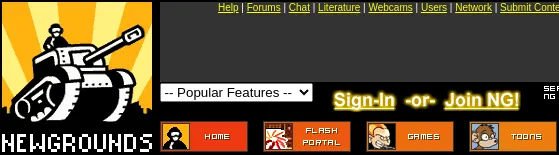
Newgrounds came first. Tom Fulp started the site in 1995. At first he picked the Flash games and cartoons people emailed him and put them up himself, and from 2000 the Portal let anyone upload their own. Visitors voted on each new submission, and the ones that scored too low were thrown out. It was rough, loud and often rude, and a lot of people who went on to make famous games and cartoons started out there.
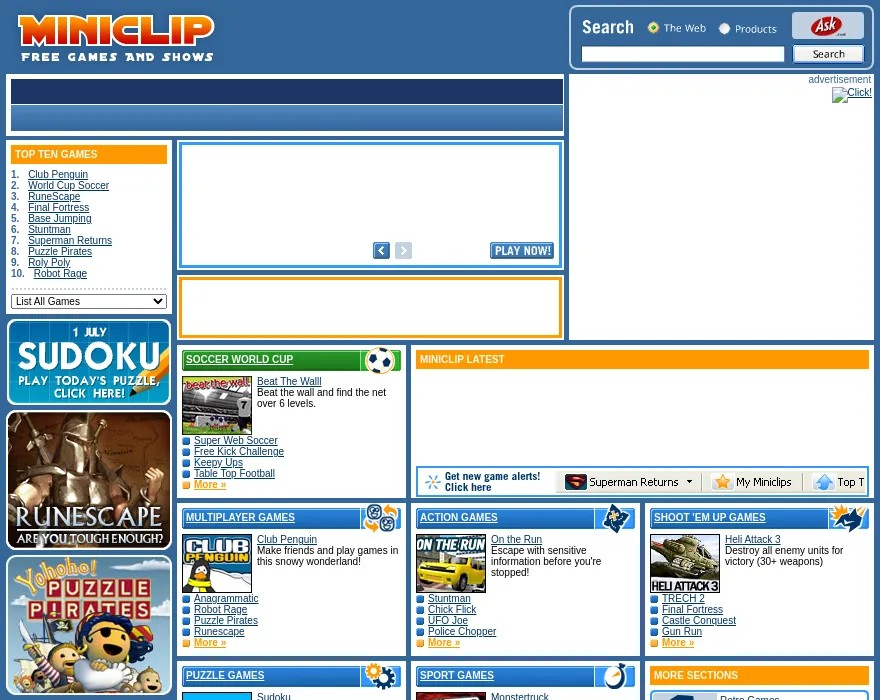
Miniclip started in 2001. Its founder, Robert Small, later said its first hits were topical games about politicians, such as Dancing Bush and Bush Shoot-Out, which together racked up hundreds of millions of plays. He said its core audience was aged 13 to 18, and that they spread the word themselves, recommending games to friends at school and college, on messenger and by text. In the summer of 2006 the number one game on Miniclip’s Top Ten was Club Penguin, another Flash game that a whole generation played when they should have been doing something else.
Kongregate arrived in 2006, founded by the siblings Jim and Emily Greer. It added things that felt grown-up for browser games: achievements, leaderboards and player profiles, and tools for the thousands of developers who made games for it. In July 2010 the games retailer GameStop agreed to buy it.
Then there were the rest: Armor Games, Addicting Games, Crazy Monkey Games and a long tail of smaller sites, many of them carrying the same games, all of them competing for the same school computers.
Why did Flash die?
Phones killed Flash, with some help from the people who made the phones.
The iPhone arrived in 2007 without Flash, and it never got it. In April 2010 Steve Jobs published an open letter called “Thoughts on Flash”, explaining why Apple wouldn’t allow it on the iPhone, iPod or iPad. He listed security problems, crashes, poor performance on mobile and battery life, and he pointed to new web standards, led by HTML5, as the future. On games, he didn’t argue: “Another Adobe claim is that Apple devices cannot play Flash games. This is true.” Then he pointed out how many games were on the App Store.
He turned out to be right about where people would play. The audience moved to phones and tablets, the browsers improved, and games that once needed Flash could now be built with the web’s own tools.
When did Flash stop working?
Adobe announced the end on 25 July 2017. Working with Apple, Facebook, Google, Microsoft and Mozilla, it said it would stop updating and distributing Flash Player at the end of 2020, and it told creators to move their work to newer, open formats.
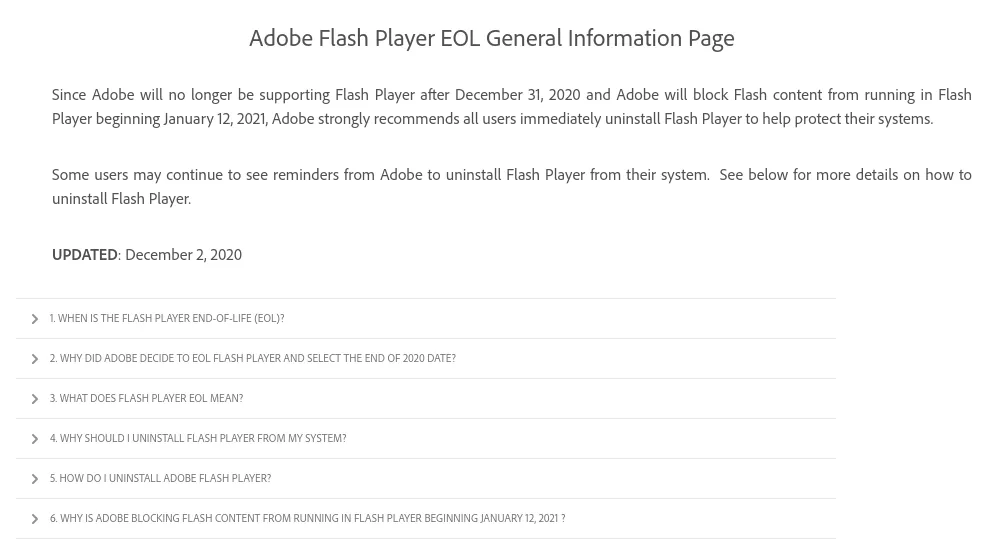
It kept its word. Support ended on 31 December 2020. From 12 January 2021, Adobe blocked Flash content from running in Flash Player, and it told everyone to uninstall the plug-in. The major browsers were already blocking Flash by default, and within weeks they removed it for good.
Plenty of game makers had already moved on to other tools, or to phones. Plenty of others had stopped making games years earlier and weren’t around to update anything. Those games simply stopped loading, and for a few months it looked as if a whole era of the web would go dark with them.
Can you still play Flash games?
Yes, and more easily than you might expect. There are three good ways.
Play them where they were. Some of the old portals now run their games through Ruffle, a free, open-source Flash emulator. It’s written in Rust and runs inside your browser, so it doesn’t bring back Flash’s old security problems. Newgrounds announced in August 2019 that it was backing Ruffle and would use it across the site, starting with cartoons and moving on to games. Ruffle handles older games, made before about 2006, very well. Newer games made with ActionScript 3 have taken longer to support, but its developers say most of them now work well enough to play. Ruffle also comes as a browser extension, which lets it play Flash on other sites too.
Download the archive. Flashpoint Archive is a volunteer project that began in December 2017 to save web games before Flash disappeared. It has now preserved more than 200,000 games and animations, made with Flash, Shockwave and more than a hundred other web technologies. It comes as a launcher you install on your computer, so the games run even if the sites that hosted them have gone.
Visit the Internet Archive. In November 2020 the Internet Archive began playing Flash animations and games in the browser, using Ruffle, so you can watch and play them without installing anything.
One warning: don’t download anything that calls itself Flash Player today. Adobe stopped distributing it years ago, and its own end-of-life page warns that unofficial downloads are a common source of malware and viruses.
What happened to the portals?
They went different ways. Newgrounds is still going, still run by Tom Fulp, and still playing its old games through Ruffle. Kongregate is still online too.
Miniclip went mobile. In 2022 its website quietly shut down almost all of its browser games and kept just two, 8 Ball Pool and Agar.io. Most people only noticed that October, when the news spread. The company is doing fine; the website you played in IT lessons isn’t. PC Gamer marked the moment with a headline that said what everyone felt: “Miniclip, home of childhood nostalgia, is finally dead”.
Flash games: a timeline
- 1995: Tom Fulp starts the website that becomes Newgrounds.
- 2001: Miniclip launches.
- 2006: Kongregate launches. In July, Club Penguin tops Miniclip’s Top Ten.
- 2007: The iPhone arrives, without Flash.
- April 2010: Steve Jobs publishes “Thoughts on Flash”.
- July 2010: GameStop agrees to buy Kongregate.
- 25 July 2017: Adobe announces that Flash will end in 2020.
- December 2017: Flashpoint begins saving web games.
- August 2019: Newgrounds announces it will use the Ruffle emulator.
- November 2020: The Internet Archive starts playing Flash in the browser.
- 31 December 2020: Adobe ends support for Flash Player.
- 12 January 2021: Adobe blocks Flash content from running.
- 2022: Miniclip’s website drops all but two of its browser games.
Why it still matters
Flash games were the first time a lot of people found out that anybody could make a game and put it in front of the world for free. Some of those makers went on to big studios and bestselling games. Most didn’t, and made something brilliant and silly for a few thousand people instead, which is its own kind of success.
The games were never meant to last. It’s down to volunteers, a handful of sites and a lot of stubborn fans that so many of them still do. There’s more from the same years in The Playground Years, and if the loading bars have made you nostalgic for the web before it, try What happened to GeoCities?
Opens in a new tab
Sources
Each link opens a saved copy in the Internet Archive’s Wayback Machine, in a new tab, as the page was when we read it.
- Flash & The Future of Interactive Content (Adobe blog, 25 July 2017)
- Adobe Flash Player EOL General Information Page (Adobe, January 2021)
- Thoughts on Flash, by Steve Jobs (Apple, April 2010)
- Miniclip: how we built (Creative Bloq)
- Miniclip, home of childhood nostalgia, is finally dead (PC Gamer, 25 October 2022)
- GameStop Acquires Kongregate (Game Informer, 27 July 2010)
- Newgrounds (Wikipedia)
- Newgrounds Working on Open-Source Emulator to Preserve Flash Content (TechRaptor, 27 August 2019)
- Flash Animations Live Forever at the Internet Archive (Internet Archive blog, 19 November 2020)
- Flashpoint Archive
- ActionScript Compatibility (Ruffle)
From the museum
