

Armor Games and Kongregate: what happened to them?
 By Obscure Internet

 10 min read
Armor Games and Kongregate are both still online, and many of their old Flash games still play there through Ruffle, a Flash emulator that runs inside your browser. Kongregate closed its open uploads in July 2020 and has belonged to the Texas studio Monumental since 2024, while Armor Games still adds new browser games and puts its old hits out on Steam.
So neither one died when Flash did. But the places you remember, the ones that ate whole summer holidays and a fair few IT lessons, have changed a lot. Here’s where they came from, what happened to them, and how to get back to the games.
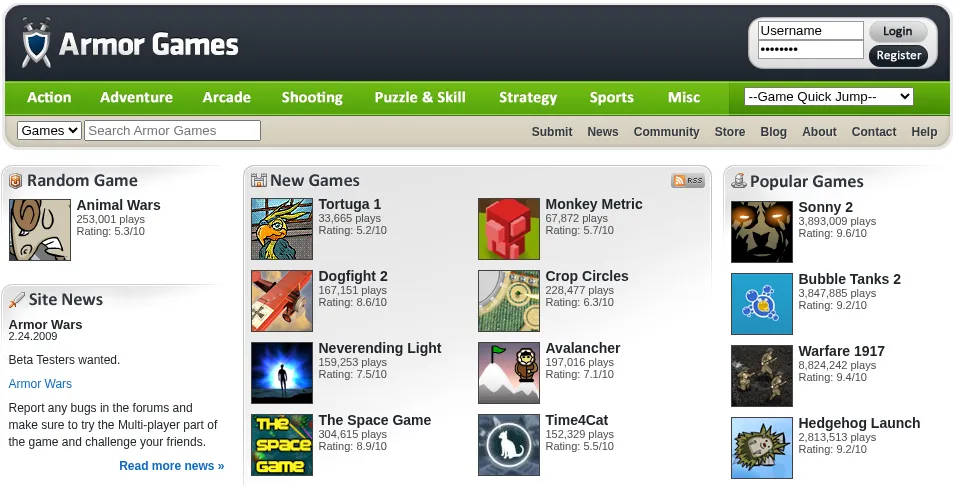
What is Armor Games?
Armor Games is a free browser games website that grew up in the Flash years by sponsoring and publishing games made by independent developers. Its founder, Daniel McNeely, ran it for most of its life.
From the museum

It started under another name. McNeely told Joystiq in 2010 that the site first launched as Games of Gondor, because he wanted to focus on medieval games: “I’m a big fan of Tolkien, CS Lewis, Robin Hood, King Arthur and pretty much anything representative of chivalry, so it was a natural choice.” Then he found out that the word “Gondor” was protected by one of Tolkien’s law firms. He went looking for another name that kept the medieval feel, and found ArmorGames.com. By November 2005 the site was answering to its new name.
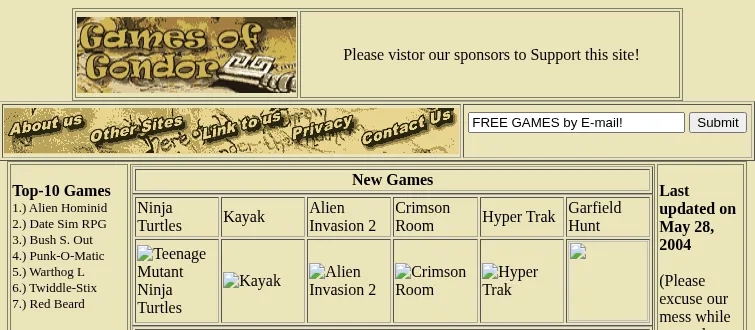
McNeely said he worked from his bedroom for a year before taking on his first full-time employee, John Cooney, who led its game development. Cooney’s own titles became some of the site’s best known, such as This Is the Only Level and the Achievement Unlocked series, both starring a small blue elephant. At its peak, McNeely told Ars Technica, Armor Games was getting around 1.2 million visitors a day.
How did Flash game makers get paid?
The two portals answered that question in different ways, and it’s a big part of why developers loved them.
Armor Games sponsored games. A developer would finish a game and approach a sponsor, and the sponsor paid to put its name on the loading screen and the title screen. McNeely told Ars Technica that from around 2005, the top Flash developers could earn five or six figures per game this way. He told Destructoid in 2010 that Armor Games didn’t get much creative control over games it simply sponsored: “a developer approaches us with a game that’s already been completed, tested and is ready for launch.” For games it made together with a developer, such as Crush the Castle 2, it got much more involved.
Kongregate shared its income instead. Anyone could upload a game, and the maker got a cut of the adverts shown next to it. That’s the model the next section is about.
What is Kongregate?
Kongregate is a free games website where anyone could upload a game, and where playing earned you points and badges. It was founded by the siblings Jim and Emily Greer. Jim had been technical director of Pogo.com, EA’s web games site, and Emily was an interactive marketing executive.
It opened as an invitation-only alpha in October 2006. TechCrunch saw it that month and was impressed by the deal it offered game makers: between 25% and 50% of the ad money from their game’s page, depending on how closely and exclusively the game was tied into Kongregate, and a promised 80% of anything players would spend inside the game, once Kongregate’s payment system was ready. Most other sites offered makers exposure and not a lot else. Kongregate also ran contests with cash prizes for the best new games, and said so on its home page.
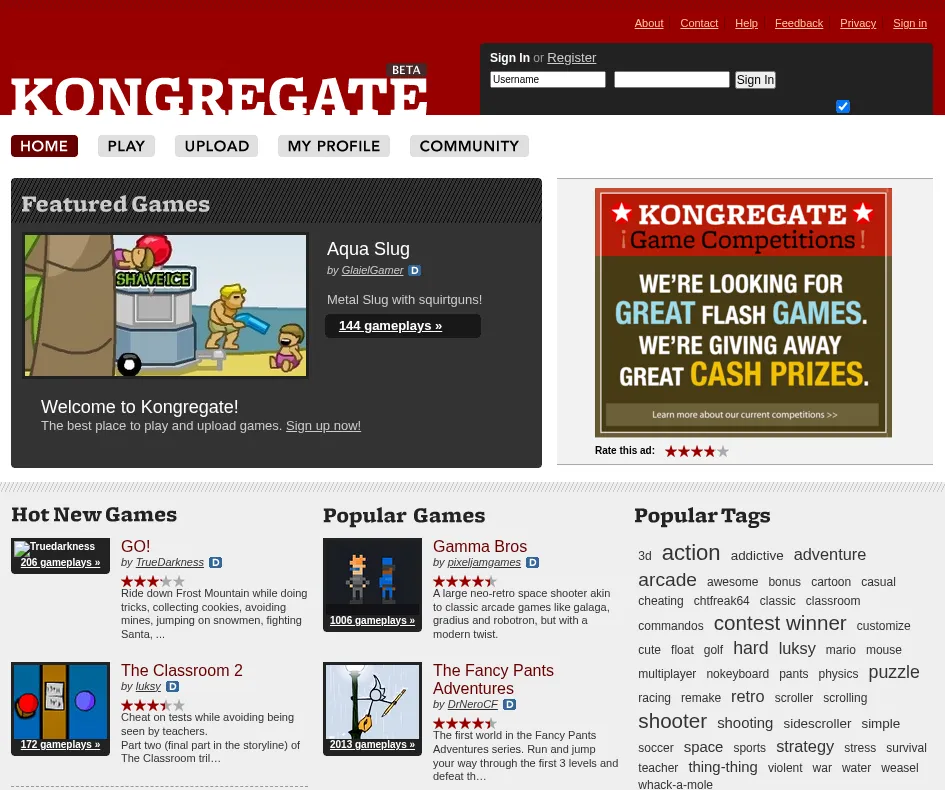
The public beta arrived on 22 March 2007, by which point more than 300 Flash and Shockwave games had been uploaded, including The Fancy Pants Adventures and Gamma Bros. Its backers included Reid Hoffman, the co-founder of LinkedIn.
Then came the badges. In June 2007 Kongregate started handing out Xbox Live-style achievements in about 20 games. Joystiq’s example was the Defender of the Universe badge, which you got for beating the final boss of Gamma Bros without using the level 3 password. It sounds small, but it changed how people played. A game you’d finished became a game you hadn’t finished yet, because there was a badge left on it, and every badge added to a points score that followed you from game to game. Plenty of people played games they’d never otherwise have touched, purely because they had a badge.
What happened to Kongregate?
It grew up, got sold three times, and slowly moved its attention from the website to making its own games.
In July 2010, the games retailer GameStop agreed to buy Kongregate, with Jim and Emily Greer staying in charge. By then, Kongregate said, more than 8,500 developers had put over 30,000 games on the site. Under GameStop it became a mobile games publisher as well as a website, and by 2017 its mobile games had passed 100 million downloads.
In June 2017 GameStop agreed to sell it to Modern Times Group, a Swedish games group, for $55 million. Kongregate was on track to make $50 million that year.
Then Flash ran out of road. Adobe had said that Flash Player would end in 2020, and on 1 July 2020 Kongregate stopped accepting new games. It also announced that by 22 July most of its chat rooms would close, and that Kongregate would stop adding badges to existing games. Game Developer reported that the site held around 128,000 Flash games by then, and that staff were being laid off the same day. Kongregate’s own explanation was blunt: “Today our business is largely focused on developing games and flash, as you are aware, is slowly going away.”
The games didn’t go with it, though. In 2022 Kongregate built Ruffle into the site, which it said brought back thousands of games without any downloads or settings to fiddle with. That October it started giving the Ruffle project $5,000 up front and $500 a month.
Who owns Kongregate now?
Monumental, an independent games studio in Austin, Texas, founded in 2020. On 8 February 2024, Modern Times Group announced a deal that let Monumental take over Kongregate, and the deal has since closed. Modern Times Group kept a 30% stake in the combined company, and Monumental’s Monty Kerr leads it.
Is Kongregate still active, or is it dead?
It’s still active, though it’s much quieter than it was. In February 2023 Kongregate told developers it was redesigning the site, named the latest new games it had added, and asked anyone with a new game to publish to get in touch, so new games do still arrive, by arrangement instead of by open upload. In 2026 the home page still offers thousands of free games and still runs a Badge of the Day, with a weekly collectible for anyone who keeps up. Younger players need a parent’s email address before they can make an account.
What’s gone is the busy, chatty site of 2008, where new games arrived every day and the chat rooms never slept. If you remember Kongregate as a place you hung out, that place mostly closed in the summer of 2020. If you remember it as a place you played games, a lot of them are still there.
What happened to Armor Games?
Armor Games had the same problem as everyone else when Flash ended, and found the same answer.
On 8 December 2020 it said it would use Ruffle for its Flash games, more than 3,700 of them. It had considered converting the games to HTML5, which would have been slow and expensive, and offering a desktop app, which would have meant asking players to install someone else’s program. Running Flash in the browser won. Games that didn’t work in Ruffle were switched off on 12 January 2021 while the site looked for a fix, and anyone who’d bought something in a Flash game through the Armor Games payment system since 1 October 2020 could ask for a refund.
The people changed too. John Cooney left in 2012 and came back in 2019 as vice-president, and two years later he took over as chief executive from McNeely. He announced his departure in June 2023, saying he hadn’t “taken more than a few consecutive weeks off from working on games since 2004”.
Meanwhile Armor Games Studios, its publishing arm, began bringing the old games to Steam properly. The Elephant Collection came out on 6 November 2023, with Cooney’s elephant games remastered and the adverts taken out. The Sushi Cat Legacy Collection followed, with a Steam release date of 10 November 2025, gathering the five main Sushi Cat games in one place.
The website carries on as well. In October 2026 the home page had a Game of the Day, a list of new games, a forum, player rankings and a link for developers to submit a game, so it’s still taking new browser games twenty years on.
How do you play Armor Games without Flash?
You don’t need to do anything special. Go to the site and pick a game, and if it’s an old Flash game, Ruffle plays it inside your browser. There’s no plug-in to install. The same goes for Kongregate. A few games still don’t run properly in Ruffle, so if a favourite is missing or broken, that’s usually why.
If you’d rather own a copy, the official re-releases are the best version. The Elephant Collection and the Sushi Cat Legacy Collection are both on Steam, published by Armor Games Studios.
For everything else, there’s Flashpoint Archive, a volunteer project that has been saving web games since December 2017. And one warning that still matters: never download anything that calls itself Flash Player today. Adobe stopped offering it at the end of 2020, and says unofficial copies are “a common source of malware and viruses”.
Are Armor Games and Kongregate safe?
Yes, in the sense that matters most: they’re long-running, legitimate games sites, and the games run in your browser, so there’s nothing to download. Stick to the real sites, armorgames.com and kongregate.com, rather than copies of their games on sites you don’t know.
They aren’t children’s sites, though, and never really were. Common Sense Media, which reviews sites for parents, rates Armor Games for 13 and up, pointing to plenty of violent games and a lot of adverts. That’s roughly what you’d expect from the sites that kept a generation of teenagers busy with tanks, zombies and things exploding.
Armor Games and Kongregate: a timeline
- 2004: Daniel McNeely’s site, Games of Gondor, is online.
- November 2005: The site is now Armor Games.
- October 2006: Kongregate opens as an invitation-only alpha.
- 22 March 2007: Kongregate’s public beta launches, with more than 300 games.
- June 2007: Kongregate introduces badges.
- July 2010: GameStop agrees to buy Kongregate.
- June 2017: GameStop agrees to sell Kongregate to Modern Times Group for $55 million.
- 1 July 2020: Kongregate stops accepting new games.
- 8 December 2020: Armor Games says it’ll use Ruffle for its Flash games.
- February 2023: Kongregate starts a redesign and invites developers to publish new games again.
- 2022: Kongregate brings its Flash games back with Ruffle.
- June 2023: John Cooney steps down as chief executive of Armor Games.
- 6 November 2023: The Elephant Collection comes out on Steam.
- 8 February 2024: Monumental takes over Kongregate.
- 10 November 2025: The Sushi Cat Legacy Collection’s release date on Steam.
Why they still matter
Newgrounds came first, and it’s where a lot of Flash makers tried their games out. Armor Games and Kongregate were where many of them first got paid for one, whether that was a sponsor’s cheque or a share of the adverts. That money turned plenty of bedroom hobbies into jobs.
For the rest of the story, from the first plug-in to the grey puzzle piece, read What happened to Flash games?, and if you were in the computer room at lunchtime, there’s Club Penguin too. There’s more from the same years in The Playground Years.
Opens in a new tab
Sources
Each link opens a saved copy in the Internet Archive’s Wayback Machine, in a new tab, as the page was when we read it.
- The Joystiq Indie Pitch: Armor Games (Joystiq, 11 May 2010)
- Interview: Armor Games founder Daniel McNeely (Destructoid, 6 April 2010)
- The rise and fall of Adobe Flash, by Richard Moss (Ars Technica, July 2020)
- Armor Games home page (Wayback capture, 1 November 2005)
- Kongregate: a Next Generation Web Games Marketplace (TechCrunch, 19 October 2006)
- Q&A: Kongregate's Greer On His Game Portal 2.0 (Gamasutra, 22 March 2007)
- Kongregate rolls out achievements for Flash games (Joystiq, 29 June 2007)
- GameStop Acquires Kongregate (Game Informer, 27 July 2010)
- Modern Times Group to acquire casual games publisher Kongregate for $55 million (PocketGamer.biz, 20 June 2017)
- Kongregate shuts off game submissions as Flash's final days approach (Game Developer, 1 July 2020)
- Armor Games Announces Its Plan to Preserve Flash Games (TechRaptor, 8 December 2020)
- The future of Flash on Armor Games (Armor Games, December 2020)
- Kongregate is Changing! (Kongregate Developers Blog, 22 February 2023)
- Supporting the Flash Community: Diamond-Level Sponsorship with Ruffle (Kongregate, 12 October 2022)
- Armor Games CEO John Cooney announces departure (Game Developer, 13 June 2023)
- MTG combines Kongregate with Monumental for a 30% stake in the joined entity (MTG press release, 8 February 2024)
- The Elephant Collection (Steam store page)
- Sushi Cat Legacy Collection (Steam store page)
- Armor Games home page (Wayback capture, 2 October 2026)
- Kongregate home page (Wayback capture, 1 April 2026)
- Parents' Guide to ArmorGames (Common Sense Media)
- Adobe Flash Player EOL General Information Page (Adobe, January 2021)
- Flashpoint Archive
From the museum
